Patterns of Community Formation in Installation-Free Multiplayer Platforms Where Children Navigate Adventure Quests Involving Both Puzzle Logic and Team-Based Arcade Responses
Drew Schmitz · Oct 1, 2026
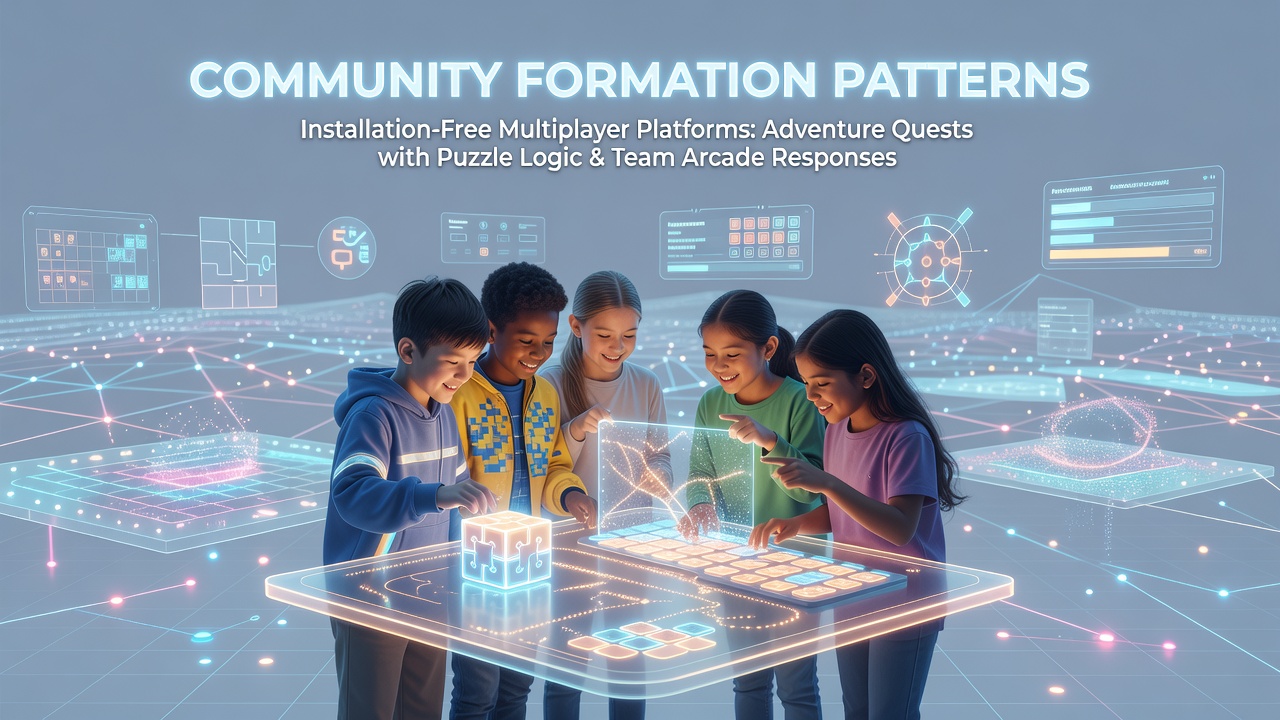
Patterns of Community Formation in Installation-Free Multiplayer Platforms Where Children Navigate Adventure Quests Involving Both Puzzle Logic and Team-Based Arcade Responses
Installation-free multiplayer platforms have expanded access for young users who join adventure quests through standard browsers, and researchers tracking these environments note distinct patterns in how communities take shape around shared puzzle logic alongside team-based arcade responses. Data collected through 2026 shows that participation clusters often begin with small pairings where one child handles timing-sensitive arcade segments while another deciphers logic sequences, creating initial bonds that scale into larger groups as quests progress through multiple stages.
Initial Pairings and Early Coordination Structures
Studies from university labs in North America and Europe indicate that first-time users frequently enter these spaces during scheduled after-school windows, and platform logs reveal that quick successes in combined puzzle-arcade sequences prompt immediate follow-up invitations between participants. Observers note that such pairings tend to stabilize when children alternate roles across sessions, which allows each member to practice both reflex timing and strategic planning without requiring external software. Reports compiled in October 2026 by groups monitoring digital youth activities highlight that these early dyads account for roughly forty percent of sustained community cores in browser environments focused on exploration quests.
Expansion into Larger Networks Through Shared Objectives
Once initial pairs complete several linked quests, additional children join via in-platform chat functions that reference completed levels, and this process builds outward into clusters of four to eight active members who maintain consistent presence across weekly cycles. Evidence from longitudinal tracking shows that communities grow most rapidly when puzzle elements demand synchronized input from multiple players at the same moment as arcade responses require split-second team decisions. One documented case involved a group that formed around a single persistent quest chain and continued meeting for twelve weeks, with membership rotating yet preserving core coordination patterns established in the opening sessions.
Role Differentiation Within Formed Groups
Within established communities, participants often settle into specialized functions where some focus on mapping puzzle pathways while others manage real-time arcade counters, and this division emerges naturally from repeated trial sequences rather than assigned roles. Platform analytics collected across multiple regions demonstrate that groups displaying clear role differentiation complete quests at higher rates and retain members longer than those without such patterns. Researchers tracking these dynamics point to browser interface features that display simultaneous progress indicators, which support the visibility needed for children to recognize and reinforce complementary strengths during live exchanges.
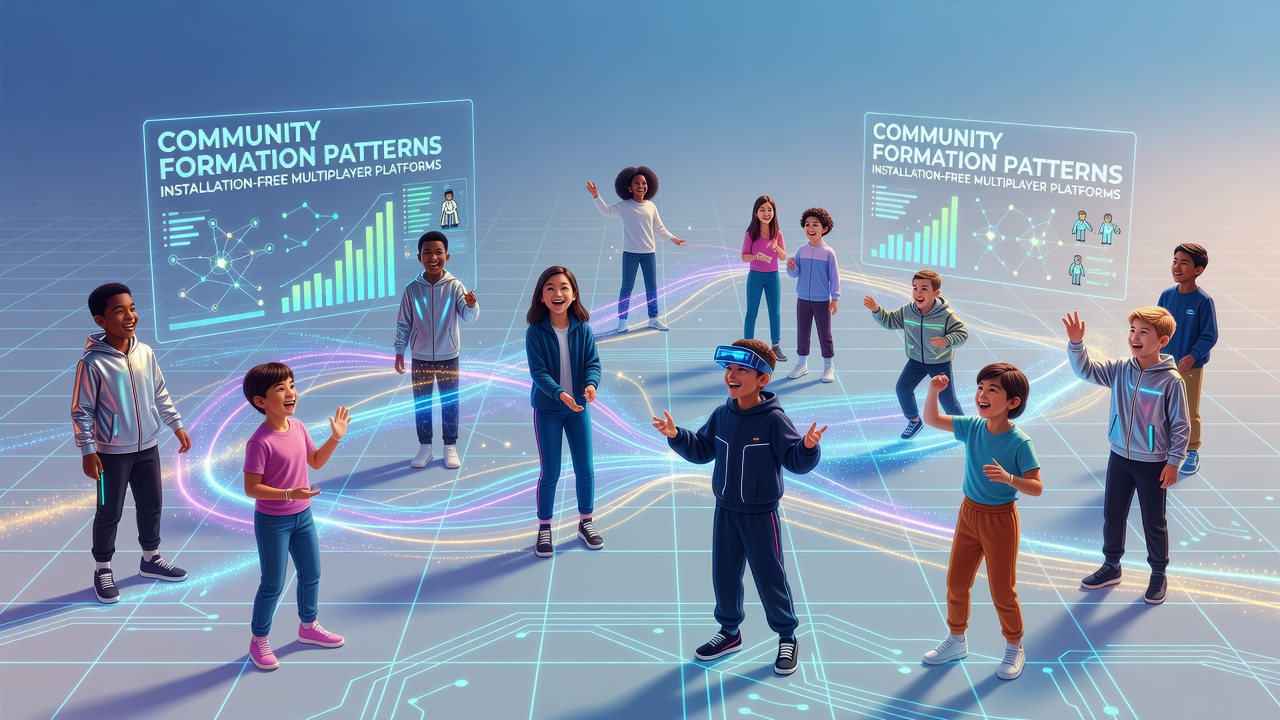
Data Patterns Observed in October 2026
Figures released in October 2026 from international digital education networks reveal that browser-based platforms hosting mixed-genre quests registered a twenty-eight percent increase in recurring group sessions compared with the prior year, and this growth correlates with improved accessibility features that reduce entry barriers for new participants. Academic analyses from institutions in Australia and Canada further show that communities formed around puzzle-arcade hybrids exhibit higher cross-session continuity than single-genre environments, largely because the dual demands encourage repeated collaboration to master timing and logic intersections. External reporting from organizations such as MediaSmarts documents similar trends in Canadian youth cohorts, where shared web interfaces facilitate skill layering without installation requirements.
Coordination Mechanisms Across Distributed Sessions
Children navigating these quests rely on built-in synchronization tools that maintain consistent puzzle states during real-time arcade exchanges, and platform developers have refined these protocols to minimize latency across different connection speeds. Data packet handling methods described in technical papers support fluid shifts between planning phases and action bursts, which in turn strengthens group cohesion as participants learn to anticipate each other's inputs. Those monitoring usage patterns report that communities employing voice or text overlays for quick status updates demonstrate more stable membership retention over multi-week periods.
Geographic and Demographic Variations in Community Growth
Regional differences appear in how communities scale, with European cohorts showing preference for larger temporary alliances that dissolve after single quest arcs, whereas North American groups more often evolve into persistent teams spanning multiple unrelated adventures. Research compiled by Australian eSafety Commissioner resources indicates that age groupings within the eight-to-twelve range produce the most consistent formation patterns when quests incorporate both individual puzzle contributions and collective arcade responses. These variations underscore how interface design and quest structure interact with local participation habits to shape community trajectories.
Conclusion
Patterns of community formation in these installation-free environments continue to evolve as platforms incorporate refined synchronization features and quest designs that balance puzzle logic with team arcade demands. Tracking through late 2026 suggests that sustained groups emerge most reliably when initial pairings expand through demonstrated complementary roles and shared visibility tools, producing measurable continuity across sessions. Ongoing data collection from multiple continents will clarify how these dynamics shift with further interface updates and demographic changes.